

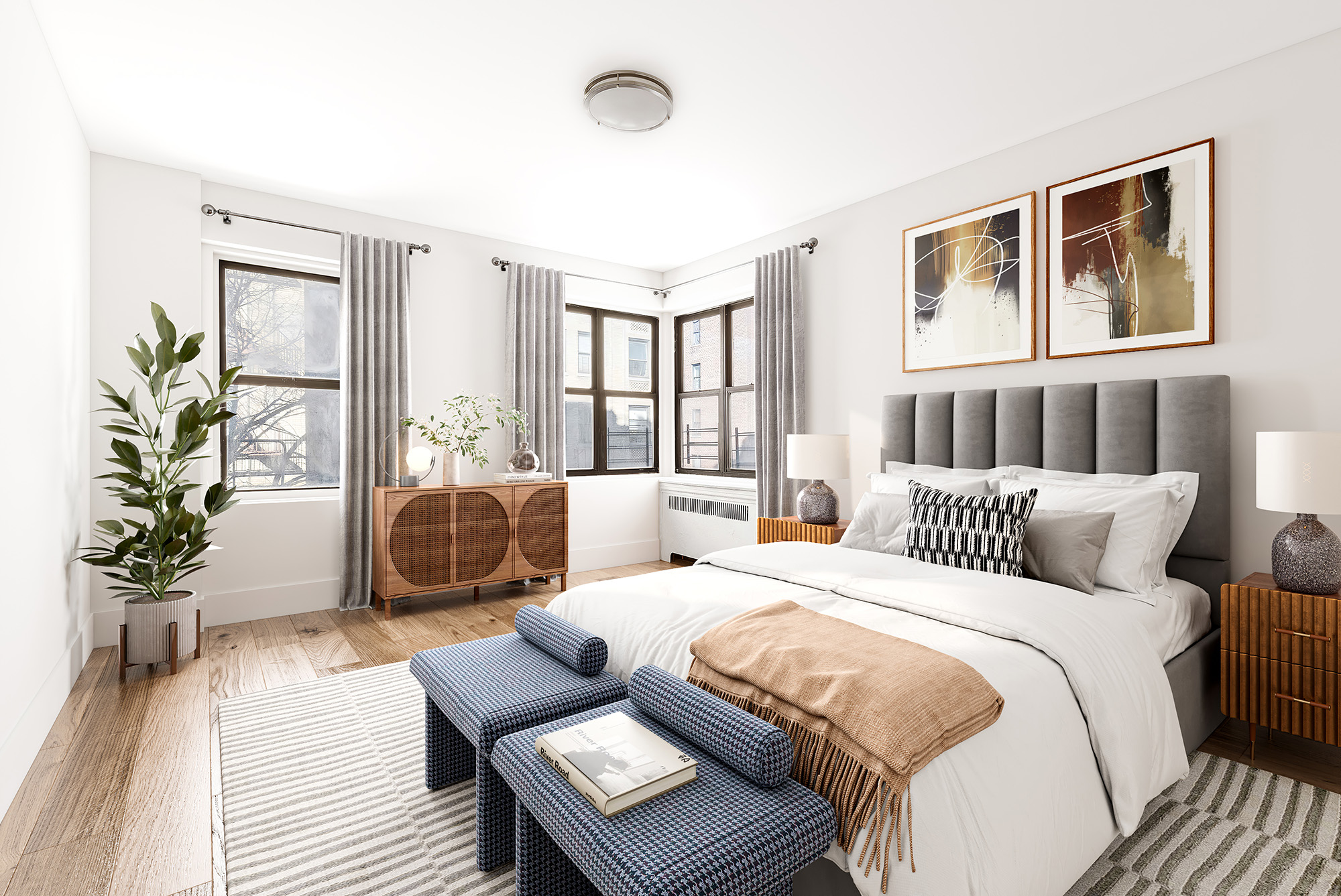
The right area rug anchors your bedroom furniture, softens hard-surface floors, and brings quiet insulation to your personal retreat. Across the Kansas City metro, bedroom layouts range from cozy primary suites in mid-century Overland Park ranches to spacious second-story rooms in newer Olathe subdivisions and updated historic bungalows in Kansas City, Kansas. Finding the right area rug size depends on your bed dimensions, the shape of the room, and the amount of exposed floor you want along the walls.
Hardwood and luxury vinyl plank floors continue to gain popularity across upper-level sleeping areas, but stepping onto cold surfaces during sub-freezing January mornings makes an area rug a practical addition. The correct rug dimensions create a balanced visual frame around your bed while keeping doorways, closets, and heating vents completely clear.
Rug Sizes for King and Queen Mattresses
Bed dimensions serve as the baseline for your rug selection. An area rug needs to extend far enough past the mattress edges to give your feet a comfortable, cushioned landing on both sides of the frame.
Queen Bed Dimensions
An 8x10 area rug provides the most reliable proportions for a standard queen bed. This size extends approximately two to two-and-a-half feet beyond both sides and the footboard, leaving generous room for bare feet while displaying the surrounding wood or vinyl floor.
In secondary bedrooms or guest rooms across Gladstone split-levels, an 8x10 rug can sometimes overpower available floor space. A 6x9 rug placed under the lower two-thirds of the frame offers soft footing where you step out of bed, leaving plenty of walking room around dressers and closet doors.
King and California King Dimensions
A king-size mattress calls for a 9x12 area rug to maintain balanced visual proportions. Because king headboards span over six feet in width, smaller textiles look dwarfed beneath the frame.
A 9x12 rug leaves roughly three feet of soft textile along each side of the mattress and extends well past the footboard. This expansive border creates a cohesive foundation in large primary suites throughout Leawood and Lenexa, anchoring your main sleeping area without crowding corner seating or dressers.
Bedroom Rug Placement Approaches
Room dimensions, nightstand styles, and doorway locations dictate how you position a rug beneath the bed. Three primary arrangements solve common space challenges across local floor plans.
The All-Furniture Layout
Placing your bed frame, footboard bench, and both nightstands completely on the rug creates an expansive, unified foundation. This arrangement calls for an oversized textile, such as a 10x14 rug, to ensure all furniture legs rest securely on the surface with several inches of border to spare.
This expansive layout suits spacious primary bedrooms in newer two-story builds across Olathe and Prairie Village. Generous floor space allows wide textile borders around your nightstands without pushing the rug edges flush against baseboards or heating supply grates.
The Two-Thirds Placement
Stopping the rug just in front of your bedside tables offers a clean, practical layout for mid-sized bedrooms. Your nightstands and the head of the bed rest directly on the hard-surface floor, while the rug slides under the lower two-thirds of the mattress and extends past the footboard.
This setup keeps your nightstands level on solid flooring, preventing lamps or water glasses from wobbling across uneven pile edges. An 8x10 rug positioned this way under a queen bed, or a 9x12 rug under a king bed, gives you soft footing beside the mattress while framing the foot of your bed cleanly.
Flanking Bedside Runners
Placing two matching runner rugs along the sides of the mattress delivers immediate comfort underfoot without covering large expanses of finished flooring. Standard 2.5x8 runners provide targeted softness right where you step out of bed each morning.
Homeowners restoring vintage oak floors in historic Kansas City, Kansas, neighborhoods frequently choose runners. This approach preserves the sightlines of original wood grain, avoids blocking wall-mounted heat vents, and keeps cold winter drafts away from your feet.
Accommodate Midwestern Architectural Details
Specific layout quirks common to regional homes affect how an area rug rests in a bedroom.
Many mid-century ranches and split-levels feature floor-mounted heat registers along exterior walls or beneath windows. Position your rug to leave at least eight to twelve inches of clearance around perimeter registers so furnace airflow moves freely into the room during peak winter heating cycles.
Door clearance presents another practical consideration. In rooms where closet doors or en-suite bathroom entries open near the bed, select low-profile flat-weaves or dense, low-pile wool textures. These compact profiles let interior doors swing open smoothly without catching on the rug edges.
Always pair your area rug with a dense, non-slip rug pad. Quality padding prevents the rug from bunching under shifting bed posts, protects hard-surface finishes from abrasive dirt friction, and adds a comfortable layer of foot cushion.
Find the Right Bedroom Area Rug at Carpet Corner
Choosing the perfect area rug size comes down to coordinating textures, fiber resilience, and proportions with your existing bedroom furniture. Since 1968, our family-owned business has helped homeowners across the Kansas City area balance practical function with personal style. With four showrooms located in Olathe, Overland Park, Kansas City (KS), and Gladstone, our team of approximately 90 local specialists is ready to help you explore woven wool textures, soft synthetic fibers, custom-bound options, and quality rug pads.
Visit our flooring specialists at your nearest showroom in Olathe, Overland Park, Kansas City, and Gladstone, or contact us to schedule your free in-home consultation.


